Envelope and White Card Mockup: A Practical Guide for Real-World Design Decisions
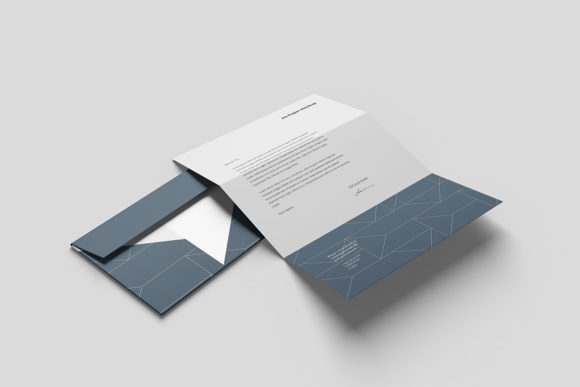
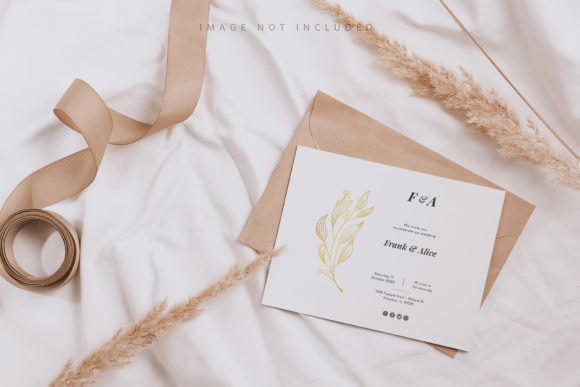
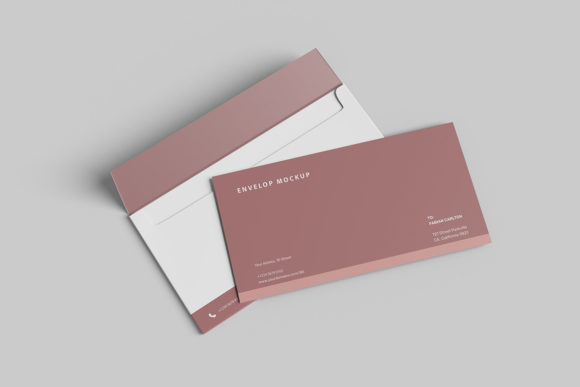
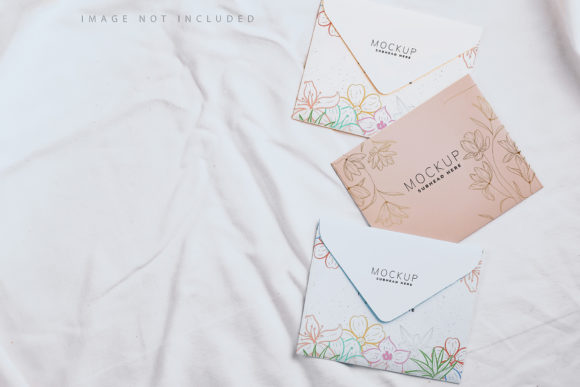
An Envelope and White Card Mockup is a digital design asset used to visualize physical stationery—specifically, a clean white card inserted into a standard envelope—within a realistic, context-aware setting. Unlike generic flat-lay templates or abstract presentation slides, this mockup type emphasizes tactile authenticity: the subtle texture of paper, the gentle fold of an envelope flap, the slight shadow where the card rests inside, and natural lighting that suggests real-world handling. It’s commonly delivered as a layered PSD or smart-object-enabled file, allowing designers to replace the card and envelope content while preserving perspective, depth, and material fidelity.
What Sets This Mockup Apart from Other Presentation Formats
Many alternatives exist for showcasing printed materials—flat templates, 3D renders, or video-based previews—but the Envelope and White Card Mockup occupies a distinct middle ground. It avoids the artificiality of fully CGI-generated scenes while offering more realism than a simple screenshot on a neutral background. Its strength lies in restraint: it doesn’t distract with elaborate office settings or staged lifestyle photography. Instead, it focuses attention on the interplay between two simple, functional objects—a card and its envelope—that together communicate intention, care, and physical presence.
This differs meaningfully from broader categories like branding presentation kits (which bundle business cards, letterheads, and social assets) or packaging mockups (designed for boxes, labels, or retail displays). The Envelope and White Card Mockup assumes minimalism by design—not as an aesthetic choice alone, but as a functional one. It reflects how many small businesses, creatives, and nonprofits actually send correspondence: thoughtfully composed, uncluttered, and grounded in tangible delivery.
When Realism Matters More Than Flexibility
One key tradeoff involves customization versus realism. Some mockup tools prioritize infinite variability—swappable backgrounds, adjustable lighting angles, editable textures—but often at the cost of believability. In contrast, high-quality Envelope and White Card Mockups are typically shot or rendered with specific lighting conditions, paper weights, and envelope styles (e.g., standard #10 business envelopes or European C5 sizes). That specificity means less “drag-and-drop” flexibility—but more confidence that what you’re previewing will translate accurately to print and physical handling.
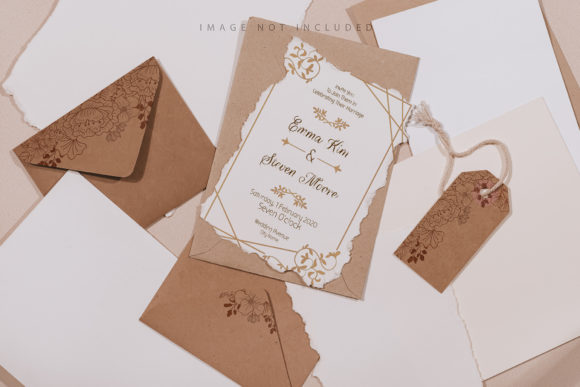
For example, if you’re designing wedding invitations, a detailed Envelope and White Card Mockup helps assess how delicate script fonts appear against the soft shadow cast by the envelope flap—or whether a matte card stock visually “sinks” too deeply into the envelope’s interior. A generic flat template won’t reveal those subtleties. Likewise, for nonprofit donor thank-you notes, seeing how a handwritten signature looks when partially obscured by the envelope edge offers practical insight no vector preview can match.
Comparing Use Cases Across Common Scenarios
Different projects demand different levels of contextual fidelity. Here’s how the Envelope and White Card Mockup fits across several common needs:
- Client presentations: When sharing concepts with stakeholders who value craftsmanship and physical nuance, this mockup conveys intentionality without requiring staging expertise. It signals that you’ve considered not just what’s printed—but how it arrives.
- Print production checks: Before sending files to press, inserting your final layout into an accurate mockup helps spot alignment issues, bleed oversights, or unintended cropping—especially around the card’s top edge near the envelope window or seal area.
- Marketing collateral: For email campaigns promoting physical mailers or direct-mail offers, embedding a realistic Envelope and White Card Mockup increases perceived credibility compared to illustrated icons or stock photos of unrelated envelopes.
- E-commerce product previews: If selling custom-printed greeting cards or branded stationery, using this mockup style builds trust—shoppers understand scale, proportion, and finish before purchase, reducing return requests tied to mismatched expectations.
Limits to Keep in Mind
No single mockup format serves every purpose. The Envelope and White Card Mockup excels in clarity and authenticity but has boundaries worth acknowledging:
- It assumes standard proportions. Unusual card sizes (e.g., square invites or oversized postcards) or non-standard envelopes may not align naturally unless the mockup explicitly supports them—so always verify dimensions before licensing or downloading.
- Material variation is limited. While some versions include options for kraft paper, linen texture, or foil accents, most focus on classic white-on-white simplicity. If your project relies heavily on specialty finishes—embossing, die-cutting, or metallic inks—you’ll need supplemental visuals beyond the base mockup.
- It doesn’t simulate mailing logistics. This mockup shows appearance—not postage requirements, envelope weight, or postal regulations. For bulk mail campaigns or international shipping considerations, pairing it with postal service guidelines remains essential.
How It Compares to Broader Alternatives
Think of the Envelope and White Card Mockup as one tool among several for communicating physical design decisions. Its closest relatives include:
- Flat-lay stationery mockups: These often feature multiple items arranged on a surface (e.g., card, envelope, pen, wax seal). They offer richer storytelling but sacrifice focus on the core envelope-card relationship—and may introduce visual noise that dilutes messaging.
- 3D modeling previews: Software-generated scenes allow full rotation and lighting control, yet risk looking synthetic unless rendered with exceptional attention to material physics. They also require technical familiarity many designers lack.
- Photographed real-world shots: Actual photos of printed pieces provide unmatched authenticity but lack editability—every revision means re-shooting, which isn’t feasible during iterative design phases.
The Envelope and White Card Mockup bridges these gaps. It retains photographic realism while supporting rapid iteration, and it maintains compositional discipline without overcomplicating the message.
Making the Right Choice for Your Project
You’ll likely benefit most from an Envelope and White Card Mockup when your goal is to convey precision, tactility, and quiet professionalism—not spectacle. It suits projects where audience expectations lean toward understated elegance: boutique branding, academic correspondence, legal retainers, artisanal product launches, or curated subscription services.
Conversely, consider other formats if your work demands strong environmental storytelling (e.g., showing a card arriving in a mailbox on a suburban porch), requires extensive multi-angle views, or centers on non-paper materials like fabric tags or metal business cards. Also, if speed is paramount and you’re working within tight deadlines, simpler flat templates may be more efficient—even if they sacrifice some realism.
Ultimately, choosing the right mockup isn’t about finding the “best” option overall—it’s about matching the tool to your decision-making needs. An Envelope and White Card Mockup supports evaluation, comparison, and refinement—not just presentation. It invites closer inspection, encourages thoughtful critique, and grounds digital design in physical consequence.
Final Considerations Before You Download or License
Before selecting a specific Envelope and White Card Mockup, review three practical details:
- Smart object compatibility: Ensure the file uses editable smart layers so you can update both card and envelope content independently—without flattening or losing quality.
- Resolution and output readiness: Look for mockups delivered at 300 DPI or higher if you plan to use them in printed pitch decks or client handouts.
- Licensing scope: Confirm whether usage covers commercial projects, client work, or resale—especially if you’re a designer offering branded stationery as part of a service package.
Used intentionally, the Envelope and White Card Mockup doesn’t just show what something looks like—it helps clarify why it matters.