Medical Supplies Mockup: A Practical Tool for Clarity, Confidence, and Creative Control
When launching a new line of surgical gloves, designing packaging for sterile wound dressings, or pitching a telehealth device to hospital procurement teams, how do you communicate quality, compliance, and care—before a single unit is manufactured? The answer increasingly lies not in dense spec sheets or vague descriptions, but in a Medical Supplies Mockup: a realistic, context-aware visual representation that bridges design intent and real-world use.
What a Medical Supplies Mockup Actually Does—Beyond “Just a Picture”
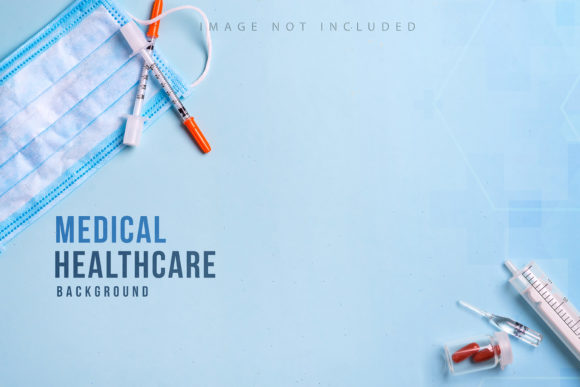
A Medical Supplies Mockup isn’t a generic stock image. It’s a purpose-built digital template—often layered in Photoshop, Figma, or specialized 3D tools—that places your product design into authentic, medically relevant environments. Think of a reusable IV pole cover rendered on an actual hospital cart with subtle wear textures, ambient lighting, and correct scale next to a standard saline bag. Or a custom-printed PPE pouch shown folded and clipped to a clinician’s belt during a simulated shift.
Unlike flat product renders, these mockups incorporate real-world variables: material sheen on stainless-steel instruments, the soft drape of non-woven gauze, shadows cast under fluorescent exam lights, even the slight condensation on a cryo-vial label in a lab fridge. That fidelity matters—not for aesthetics alone, but because it signals competence, attention to regulation-aligned detail, and user-centered thinking.
Why Demand Is Growing—Quietly but Steadily
This isn’t a trend driven by social media virality. It’s emerging from deeper shifts in how medical products move from concept to adoption:
- Remote collaboration is now standard. Procurement officers, infection control specialists, and clinical engineers rarely gather in person for early-stage reviews. A high-fidelity Medical Supplies Mockup lets stakeholders assess ergonomics, labeling legibility, and integration with existing workflows—without needing physical prototypes.
- Regulatory submissions benefit from contextual clarity. While not a replacement for formal documentation, supporting visuals in FDA pre-submission packages or CE technical files help reviewers quickly grasp intended use, user interface, and environmental fit—reducing back-and-forth and timeline risk.
- Marketing and education rely on trust, not just claims. A healthcare blogger comparing portable ECG devices doesn’t need flashy animations—they need side-by-side mockups showing how each unit fits in a pocket, attaches to a tablet, or displays data on a clinic wall screen. That realism builds credibility faster than bullet points ever could.
It’s also tied to broader creative economics. With tighter budgets and compressed launch windows, professionals—from freelance medtech designers to in-house marketing leads at small biotech firms—are prioritizing tools that reduce revision cycles. A well-chosen Medical Supplies Mockup can cut down on misaligned feedback by anchoring discussions in shared visual language.
How the Practice Has Evolved—From Static Shots to Smart Context
Five years ago, most “medical mockups” were isolated product shots against white backgrounds or generic hospital corridors. Today’s best options reflect nuanced understanding:
- User diversity is built-in. Leading mockup libraries now include variations showing equipment in use by clinicians of different heights, body types, and skin tones—recognizing that glove fit, monitor reach, and cart maneuverability aren’t one-size-fits-all.
- Environment specificity matters more than ever. A mockup labeled “ICU Setting” now often includes accurate background elements: specific ventilator models, standardized IV pole configurations, even ambient signage compliant with Joint Commission wayfinding guidelines.
- Interactivity is emerging—but thoughtfully. Some newer web-based mockup tools allow toggling between sterilization states (e.g., sealed vs. opened packaging), adjusting lighting to simulate OR vs. outpatient exam room conditions, or swapping label text to preview multilingual versions—all without requiring advanced 3D skills.
This evolution mirrors growing expectations across health tech: users want solutions that acknowledge complexity, not simplify it away. A Medical Supplies Mockup that ignores glove thickness relative to tactile sensitivity—or shows a Bluetooth-enabled thermometer with unrealistic battery life indicators—undermines rather than supports trust.
Practical Implications: Who Uses These—and How Well?
The value isn’t theoretical—it shows up in daily decisions:
For Product Designers & Engineers
Using a Medical Supplies Mockup early helps surface usability questions before tooling begins. Example: Placing a redesigned suture kit mockup inside a standard crash cart drawer reveals whether its footprint interferes with adjacent defibrillator pads or medication vials. That insight saves weeks—and thousands—in late-stage redesigns.
For Marketers & Sales Teams
A consistent set of mockups—showing your disposable laryngoscope blade in EMS vehicles, urgent care bays, and rural clinic kits—creates cohesive storytelling. It also enables rapid adaptation: swap in new branding or regulatory badges across all scenes with a few clicks, rather than commissioning multiple custom illustrations.
For Educators & Clinical Trainers
Instructors building online modules on infection prevention use mockups to demonstrate proper donning sequences—not just static diagrams. Seeing a N95 mask correctly positioned over a mockup of a clinician’s face (with realistic facial contours and hairline) improves retention far more than text-only instructions.
For Small-Business Owners & Freelancers
If you’re handcrafting antimicrobial stethoscope covers or designing ergonomic orthopedic braces, a strong Medical Supplies Mockup signals professionalism to potential B2B buyers. It answers unspoken questions: “Will this look like a medical-grade solution—or like a consumer accessory?” The difference often hinges on presentation as much as performance.
Choosing and Using Mockups with Integrity
Not all Medical Supplies Mockup resources serve users equally. Look for those that:
- Clearly state source references—for example, citing ANSI/AAMI standards for labeling placement or ISO 15223-1 symbols used in mockup labels;
- Offer editable layers (not flattened JPEGs), so you can adjust colors, add logos, or modify text without degrading quality;
- Avoid exaggerated scenarios—like showing a handheld ultrasound device operating flawlessly in heavy rain—unless explicitly labeled as conceptual or illustrative;
- Include usage guidance: recommended file formats for print vs. web, color profiles for medical-grade accuracy, and notes on accessibility (e.g., contrast ratios for label text).
Also consider licensing carefully. Commercial use rights are essential if mockups appear in client-facing materials or sales decks. Some free resources restrict use in regulated communications—something worth verifying before finalizing a pitch to a hospital system.
Looking Ahead—Substance Over Spectacle
The future of Medical Supplies Mockup won’t be defined by higher resolution alone. It will be shaped by deeper integration with real-world constraints: interoperability with CAD files for seamless prototyping, compatibility with AR preview tools for virtual stakeholder walkthroughs, and smarter templates that auto-adjust for regional regulatory differences (e.g., CE marking vs. FDA-required statements).
But the core value remains unchanged: reducing ambiguity. In healthcare—where clarity affects safety, efficiency, and trust—a well-executed Medical Supplies Mockup does more than showcase design. It demonstrates respect—for the people using the tools, the environments where they’re deployed, and the rigorous standards that govern them.
Whether you’re sketching your first prototype or refining a Class II device submission, investing time in selecting or creating thoughtful, accurate mockups isn’t about polish. It’s about precision—with purpose.