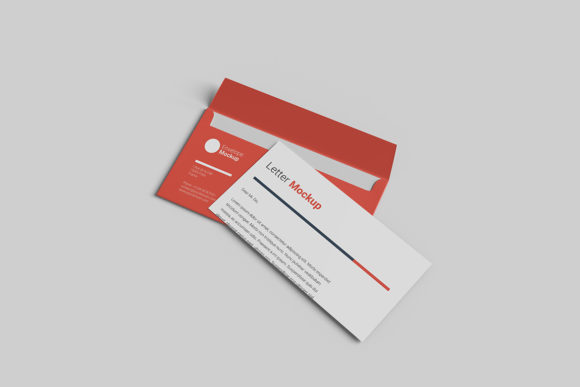
Envelope and Letter Mockup: A Practical Tool for Visual Communication and Design Validation
When presenting a concept—whether it’s a new brand identity, a direct-mail campaign, or a personalized customer onboarding sequence—the medium matters as much as the message. An Envelope and Letter Mockup bridges that gap between abstract design and tangible perception. It’s not merely a decorative overlay; it’s a contextual framing device that simulates how printed correspondence appears in real-world settings—on a desk, in a mailbox, held in hand, or stacked with other mail. Unlike generic presentation templates, a well-crafted Envelope and Letter Mockup grounds digital design work in physical reality, supporting clarity, empathy, and strategic decision-making across disciplines.
What Makes an Envelope and Letter Mockup More Than Just a Background?
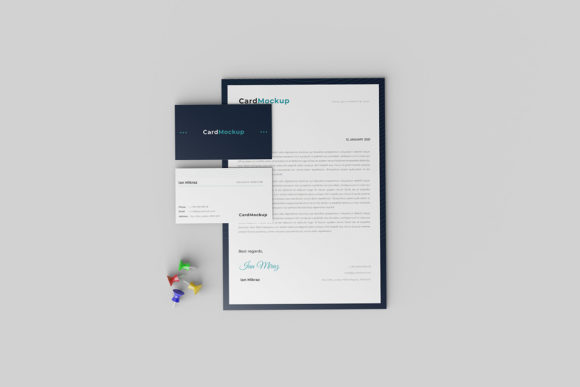
An Envelope and Letter Mockup goes beyond static imagery. At its core, it’s a layered, editable composition—typically built in Photoshop or compatible tools—that isolates key surfaces (envelope front, flap, back; letter header, body, signature block) while preserving realistic lighting, texture, shadows, and perspective. The envelope might show subtle paper grain, a faint crease where it folds, or the soft reflection of ambient light on its surface. The letter may appear slightly curled at the corners, as if recently removed from its enclosure, or bear a gentle shadow cast by the envelope above it.
This fidelity serves a functional purpose: it reveals how typographic choices behave at actual size, how color combinations translate under natural light, and whether visual hierarchy survives outside the sterile glow of a screen. For example, a deep navy ink on cream stock may look elegant in RGB preview—but an Envelope and Letter Mockup rendered with accurate CMYK simulation and paper texture can expose legibility issues before print production begins.
Real-World Applications Across Diverse Roles
The versatility of the Envelope and Letter Mockup emerges most clearly when viewed through the lens of varied professional needs—not as a one-size-fits-all asset, but as a responsive tool shaped by context.
For Brand Strategists and Identity Designers
When developing a brand’s tactile expression—especially for sectors like luxury goods, legal services, or academic institutions—physical touchpoints reinforce trust. A strategist might use an Envelope and Letter Mockup to test how monogrammed stationery feels alongside existing logo applications. Does the embossed letterhead align spatially with the envelope’s window cutout? Does the return address placement create visual rhythm or clutter? These are decisions best evaluated in situ, not in isolation.
For Direct-Mail Marketers and Small Business Owners
Direct mail remains among the highest-converting offline channels—particularly when personalized. An Envelope and Letter Mockup helps marketers visualize the full unboxing experience: the weight of the envelope, the anticipation of opening, the first impression of the letterhead. One boutique financial advisor reported a 22% lift in response rate after refining their letter layout using mockups that simulated how recipients would hold and scan the page—leading them to reposition contact details near the bottom right corner, where eyes naturally land after reading.
For Educators and Instructional Designers
In teaching communication, rhetoric, or professional writing, instructors use Envelope and Letter Mockup visuals to demonstrate genre conventions. Rather than describing “block format” or “inside address placement,” students observe it embedded in context—how margins interact with envelope windows, how date alignment affects perceived formality, or how white space signals respect for the reader’s time. This concrete scaffolding supports deeper retention than abstract rules alone.
For Researchers and UX Practitioners
Researchers studying user perceptions of institutional trust often include physical correspondence in stimuli sets. An Envelope and Letter Mockup allows controlled variation—testing how font choice, postage stamp style, or envelope color influences credibility judgments—without printing hundreds of variants. In one university study, participants consistently rated letters presented in matte-finish mockups as “more sincere” than identical content shown in glossy or digital-only formats—a nuance only visible through contextual rendering.
Key Characteristics That Define Quality Mockups
Not all Envelope and Letter Mockups deliver equal value. Effective versions share several distinguishing traits:
- Photorealistic material properties: Paper thickness, sheen level (dull, satin, gloss), and fiber visibility affect tone. A recycled kraft envelope conveys sustainability differently than a pearlescent vellum one—even before a word is read.
- Consistent lighting and depth cues: Shadows should fall logically based on a defined light source; overlapping elements must obey spatial relationships. A floating letter with no cast shadow breaks immersion instantly.
- Smart layer organization: Professional-grade mockups separate editable zones cleanly—e.g., “Letter – Body Text,” “Envelope – Return Address,” “Stamp – Placement Area”—so users swap content without disrupting realism.
- Multiple usage contexts: The strongest assets include variations: a single envelope on a wooden desk, a bundle tied with twine, a close-up of a handwritten signature over printed text, or an envelope resting inside a branded mailer box.
Practical Considerations Before Implementation
Adopting an Envelope and Letter Mockup into workflow yields benefits—but only when aligned with realistic expectations and constraints.
First, consider output intent. If the final deliverable is strictly digital—such as a pitch deck or client presentation—high-resolution mockups enhance professionalism and storytelling. But if the goal is prepress validation, remember that mockups simulate appearance, not print behavior. They won’t catch trapping errors, ink coverage limits, or spot-color mismatches. Always pair mockup review with physical proofs when budget and timeline allow.
Second, assess accessibility implications. While mockups enrich visual communication, they shouldn’t replace clear, structured content. When sharing mockup-based presentations externally, ensure alt text describes both the scene (“cream envelope with navy monogram, resting on oak desk”) and functional information (“letter contains appointment confirmation with date, time, and virtual meeting link”).
Third, be mindful of scale and proportion. Some free mockups distort aspect ratios or compress letter height unrealistically—making line spacing appear tighter than it will in print. Cross-check critical measurements: standard #10 business envelopes measure 4.125" × 9.5"; a typical business letter runs 8.5" × 11". Deviations here mislead more than inform.
How Context Shapes Mockup Selection and Use
The most effective use of an Envelope and Letter Mockup isn’t about finding “the best” version—it’s about matching the mockup’s narrative to your specific communication goal.
A nonprofit fundraising team preparing a year-end appeal might select a mockup showing a slightly weathered envelope arriving in a suburban mailbox—evoking authenticity and urgency. In contrast, a tech startup announcing a partnership might choose a sleek, minimalist mockup: a slim linen envelope angled beside a tablet displaying the same letter digitally—reinforcing omnichannel alignment.
Even small adjustments shift meaning. Rotating the envelope 7 degrees clockwise suggests immediacy and human handling; centering it perfectly signals precision and control. Adding a coffee stain near the bottom edge implies approachability; omitting it emphasizes polish. These aren’t arbitrary aesthetics—they’re deliberate rhetorical choices supported by the mockup’s structure.
Emerging Trends and Thoughtful Adaptation
As hybrid communication grows—blending physical mail with QR codes, NFC tags, and dynamic URLs—the role of the Envelope and Letter Mockup is evolving. Modern versions increasingly incorporate interactive hotspots or layered annotations: hovering over a QR code in a digital mockup might reveal the destination URL; clicking a postage area could display USPS service tier options.
At the same time, ethical considerations are gaining attention. Designers now ask: Does this mockup reflect diverse handwriting styles, inclusive name structures, and accessible type sizes? Are envelope windows sized appropriately for various address formats—including international postal standards? Leading creators are expanding libraries to include left-hand address placements, Braille-ready zones, and bilingual layout guides—recognizing that inclusivity begins with representation in visualization tools.
One independent stationery designer began annotating each Envelope and Letter Mockup with notes on sustainable paper alternatives, noting grams per square meter (gsm), FSC certification status, and water usage data. Clients responded not just to the visual impact—but to the transparency behind it. That shift—from decoration to documentation—signals maturity in how professionals engage with these tools.
Integrating Mockups Into Iterative Workflows
Rather than treating the Envelope and Letter Mockup as a final flourish, embed it earlier in the process. Try this sequence:
- Sketch layouts directly onto a low-opacity mockup layer—skipping wireframes entirely to force consideration of real-world constraints from day one.
- Test readability by exporting three versions at 72 dpi (screen), 150 dpi (presentation), and 300 dpi (print proof)—then viewing each on different devices to assess contrast and scale shifts.
- Share annotated mockups with stakeholders, using arrows and callouts to highlight intentional choices: “This margin width ensures address visibility through envelope window,” or “Signature block sits at natural eye-level when letter is held at arm’s length.”
This approach transforms the mockup from passive showcase to active collaborator—surface-level polish becomes evidence-based rationale.
Ultimately, the Envelope and Letter Mockup endures because it answers a persistent human need: to see ourselves—and our messages—as others will. It doesn’t eliminate ambiguity, but it narrows it meaningfully. Whether you’re refining a doctoral admissions letter, prototyping a subscription welcome kit, or teaching persuasive writing to high school students, grounding ideas in tangible context isn’t an extra step. It’s where clarity begins.